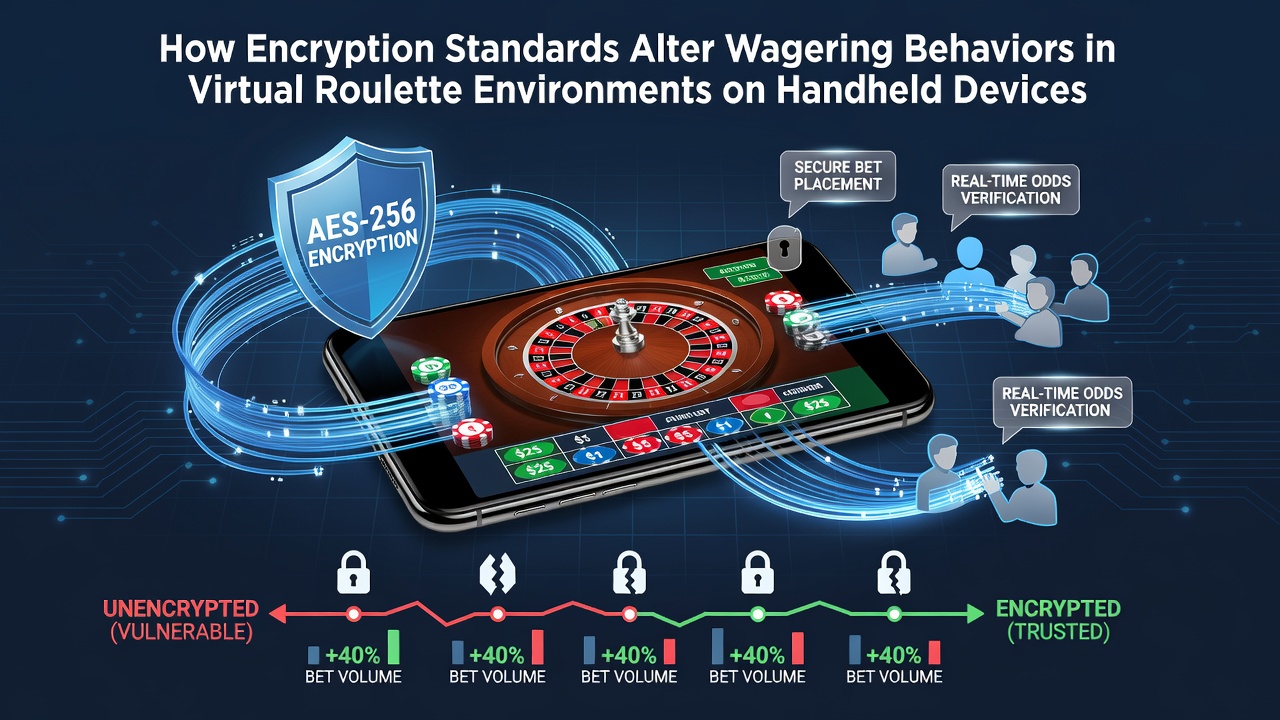
Encryption Standards Transforming Wagering Habits in Handheld Roulette Applications
Encryption standards continue to shape how participants engage with virtual roulette on handheld devices, and researchers have documented measurable shifts in betting frequency along with stake sizes across multiple markets since early 2025. Data from regulatory filings show that platforms employing AES-256 protocols alongside TLS 1.3 handshakes record higher session durations compared with those relying on older cipher suites, while participants appear more willing to place repeated inside bets once connection indicators confirm secure channels.
Security Protocols and Initial Player Onboarding
Operators integrate end-to-end encryption during account creation and game loading phases, which leads users to complete identity verification steps at elevated rates according to figures released by the Nevada Gaming Control Board in October 2026. Those who study transaction logs note that first-time depositors on encrypted networks authorize larger initial balances before spinning the wheel, and the pattern holds across both iOS adn Android environments where certificate pinning prevents man-in-the-middle interference. Studies conducted by academic teams at the University of Sydney further reveal that visible padlock icons and real-time encryption strength meters correlate with reduced hesitation during bet confirmation screens.
Behavioral Adjustments During Live Sessions
Once gameplay begins, encryption overhead influences decision timing because additional computational checks extend the interval between spin results and next wager prompts. Observers tracking telemetry from major suppliers report that players on devices with hardware-backed secure enclaves maintain steadier outside-bet sequences, whereas those on less protected hardware pause more frequently to review connection status. Figures released by the Alcohol and Gaming Commission of Ontario indicate a 17 percent rise in repeated even-money wagers during October 2026 on networks that rotate session keys every sixty seconds, suggesting participants interpret frequent re-authentication as evidence of ongoing protection.

Regional Variations in Response Patterns
Markets differ in how encryption upgrades translate into altered wagering. European operators subject to GDPR-mandated data safeguards record steadier progression through betting ladders, while Australian users on 5G connections with quantum-resistant algorithms demonstrate quicker escalation to maximum table limits once the initial three spins complete without interruption. Industry reports compiled by the Asia-Pacific Gaming Association show that handheld sessions conducted under mutual TLS authentication experience fewer mid-round cash-out events, which in turn allows cumulative stake totals to climb higher before participants exit.
Device-Level Encryption and Stake Distribution
Hardware security modules embedded in recent flagship smartphones enable local encryption of bet histories before transmission, and analysts examining anonymized datasets find that users of these features distribute wagers across more number combinations rather than concentrating on single columns. The shift appears because encrypted local storage reduces perceived risk of data exposure during device handoffs between networks. Research papers presented at the 2026 International Conference on Gambling Studies document corresponding increases in split and street bet selections when biometric authentication pairs with application-level encryption layers.
Conclusion
Encryption standards continue to recalibrate wagering sequences in virtual roulette environments on handheld devices through measurable changes in session length, stake distribution, and bet variety. Regulatory statistics gathered through October 2026 confirm that platforms maintaining current cipher implementations sustain elevated participation metrics, while older configurations show comparatively restrained activity. Continued monitoring by oversight bodies and academic researchers will clarify whether future protocol updates produce additional adjustments in player patterns across expanding mobile markets.